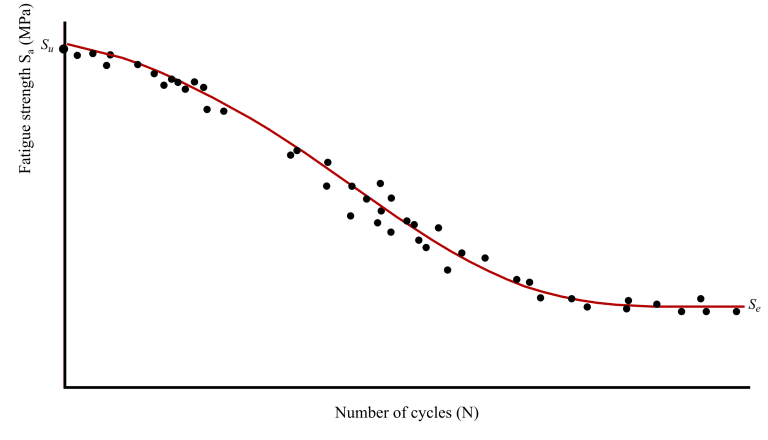
Stop treating S-N curves as a black box. Master Basquin’s equation, Miner’s rule, and essential correction factors to ensure your FEA fatigue predictions match reality.
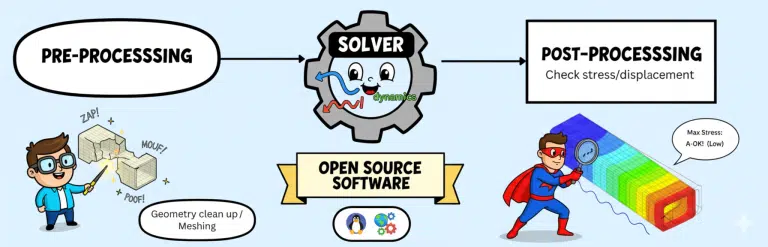
From CalculiX to OpenFOAM, explore the best free FEA programs. Master open-source simulation tools for structural, thermal, and CFD analysis with our comprehensive selection guide.
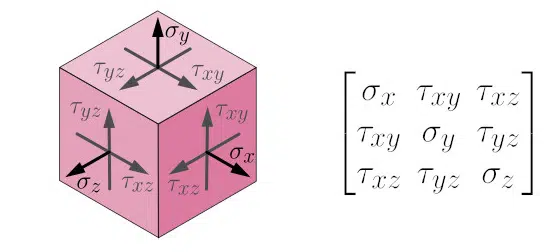
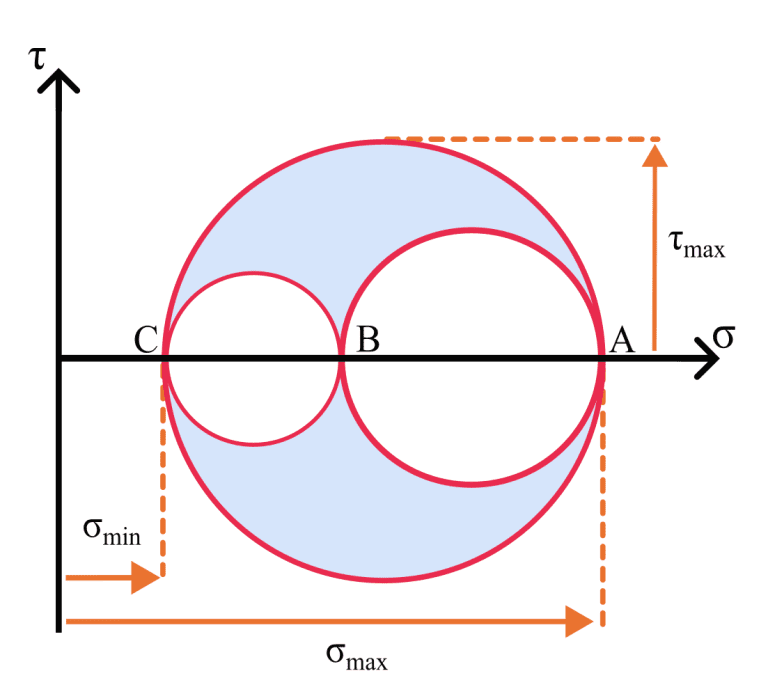
Visualize complex 3D stress states instantly. Compute principal stresses, maximum shear, and failure criteria like Von Mises with our interactive, professional-grade Mohr’s Circle calculator.
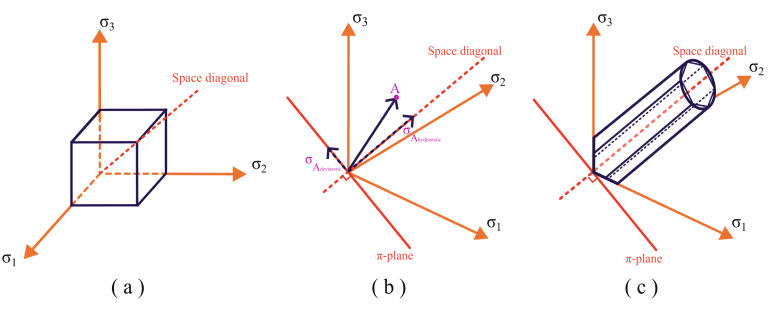
From simple tension tests to complex components: discover how to use yield criteria to accurately predict structural failure and validate your finite element analysis results.
Missing strain hardening data? Learn to approximate true stress-strain curves for ductile materials in FEA using the alternative Ramberg-Osgood method and simple tensile properties.
Simplify complex stress analysis. Learn to use Mohr’s Circle to visualize stress states, find principal planes, and predict material failure without lengthy algebraic calculations.
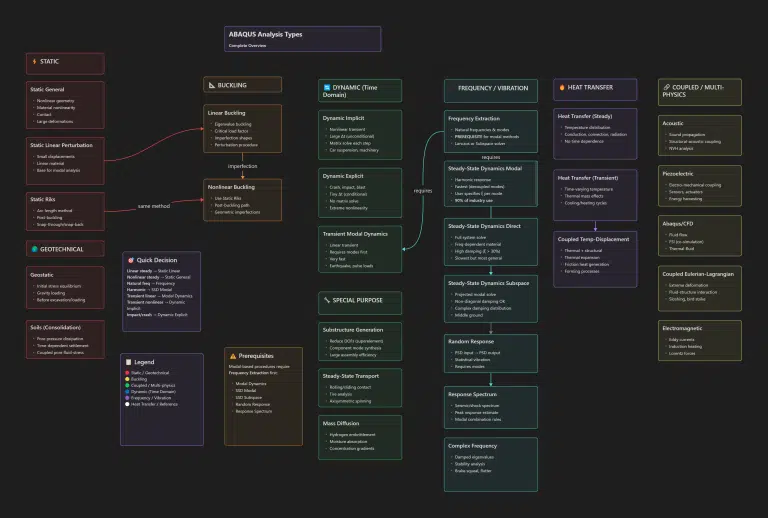
Success in FEA isn't about the software—it's about the mindset. Learn to break down complex nonlinear problems into manageable steps and validate assumptions early.
Master material modeling for FEA. Understand the critical differences between engineering and true stress, plastic deformation, and strain hardening models for accurate non-linear simulation results.